
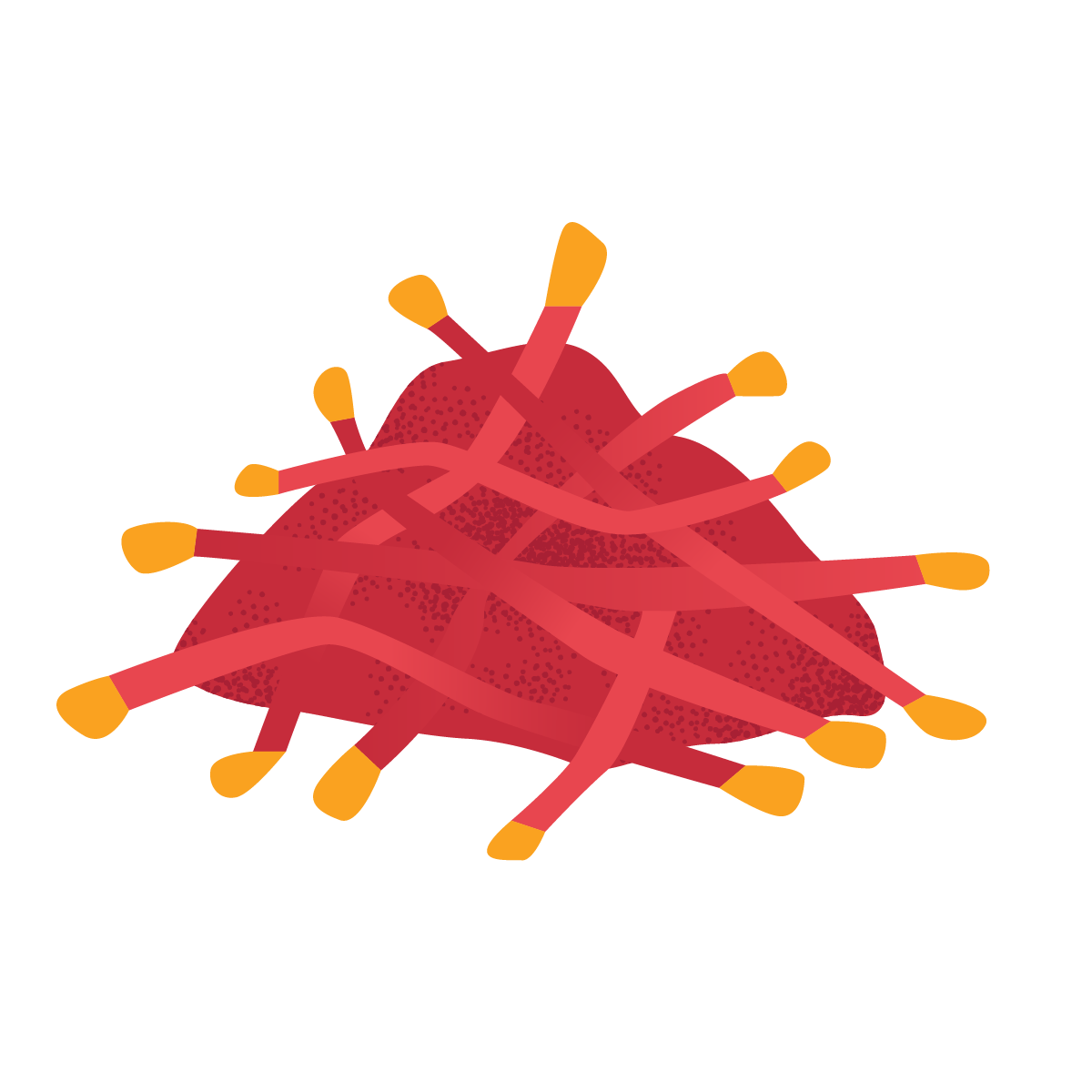
Saffron is the dried stigma of the Crocus sativus flower, the most expensive spice in the world by weight. Free Will, a dietary supplement, carries a labeled 30 mg of saffron extract from stigmas per scoop: the daily amount most human trials use, which range from 22 to 30 mg. 1,2,8
In healthy adults reporting low mood, four weeks of a 28 mg extract improved a mood-disturbance score versus placebo in a 128-person trial, 1 and eight weeks of 30 mg lowered depressive-feeling scores in a 56-person trial. 2 Two other healthy-adult trials found no difference on their main outcomes. 4,5 Most saffron research is in people diagnosed with depression, a clinical population; Free Will is not a treatment for anything.
Key facts
| Fact | Detail |
|---|---|
| Names | Saffron: the dried stigmas of Crocus sativus L., the saffron crocus. Not "Indian saffron" (turmeric) or safflower, two plants used to adulterate it. 31 |
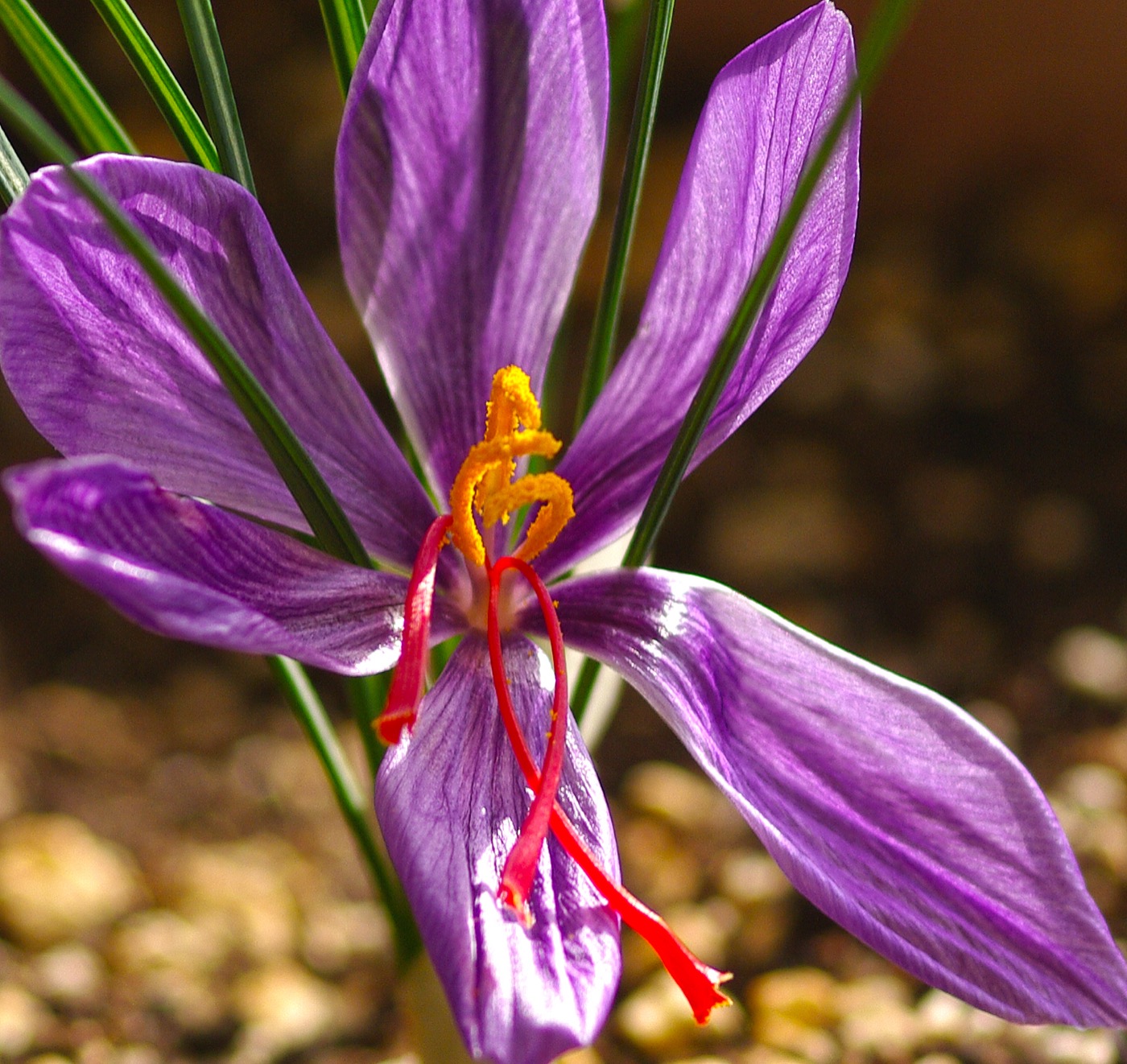
| Where it comes from | Three red stigmas per flower, picked and dried by hand. The plant is a sterile triploid that cannot set seed; every field on earth is grown from corms of one clonal lineage. 28,29 A 2013 review put world output at about 300 tons a year, roughly three-quarters from Iran. 30 |
| What's in it | Crocins (the pigments), picrocrocin (the bitter taste), safranal (the aroma) and crocetin, which the crocins break down into. More than 150 compounds in all. 19 |
| In Free Will | A labeled 30 mg of saffron extract from stigmas per scoop (see the Supplement Facts panel). The extract's brand, source and standardization (crocin and safranal content) will be published once the first production batch and its paperwork are in hand. |
| Doses used in research | 22–30 mg per day, or a single 30 mg dose, in the healthy-adult trials; 1,2,3 30 mg per day in the diagnosed-depression trials; 8,9,10 100–400 mg per day in short safety studies. 21,22 |
| How it absorbs | Crocins are converted in the gut to crocetin, which reaches the blood and can cross into the brain. 19 In 10 healthy adults given purified crocetin (7.5–22.5 mg), it peaked at about 4–5 hours with a half-life of 6–7.5 hours. 20 |
| Pairs with | Rhodiola, L-theanine and Alpha-GPC on the Focus & Mood side. No human trial has tested saffron with caffeine; see safety. |
| Regulatory status | FDA lists saffron as a spice generally recognized as safe (21 CFR 182.10) and as a food color additive exempt from certification (21 CFR 73.500); both cover the spice in food, not a supplement claim. 33,34 |
Why it's in Free Will
Saffron is the "mood" half of Free Will's Focus & Mood side. We chose 30 mg of extract because that is the dose the research uses: 28 and 30 mg a day in the two placebo-controlled healthy-adult trials, 1,2 a single 30 mg dose in the acute stress study, 3 and 30 mg a day in the original Tehran trials in people with diagnosed depression. 8,9,10 Our amount sits inside the studied range, not above or below it.
What the healthy-adult trials found. Kell and colleagues gave 128 adults with self-reported low mood, but no diagnosis, 28 mg, 22 mg or placebo for four weeks. The 28 mg group improved on total mood disturbance versus placebo (d = −1.10); 22 mg did not. Screening and outcomes were self-reported. 1 Jackson and colleagues gave 56 healthy adults with subclinical low mood, anxiety or stress 30 mg or placebo for eight weeks: the saffron group reported lower depression scores, and urinary crocetin rose and tracked the mood change. 2
What they did not find, and what we don't claim. A 2025 six-week trial in 51 healthy adults with subclinical symptoms found no effect on its primary composite of depression, anxiety and fatigue. 4 A six-week trial of 28 mg in 62 recreationally active adults found no between-group difference on any outcome across the whole sample. 5 EFSA reviewed the branded-extract evidence in 2021 and concluded one unreplicated trial could not support a mood claim. 7 Our honest read: a real but small and inconsistent research base for mood in healthy adults, at the dose we use. Not a guaranteed lift, and not a treatment.
About the depression research. Most saffron trials, and the depression meta-analyses, are in people diagnosed with depression, usually mild to moderate. In that population saffron outperformed placebo and was not inferior to the antidepressants it was compared with, in pooled analyses of 5 to 23 trials; the largest also pooled some general-population samples and found evidence of publication bias. 11,12,13,14,15 They set the dose; they do not tell you what a scoop will do for a healthy adult. Free Will is a dietary supplement, not a treatment for depression or anything else; if you have a diagnosis, talk to your clinician.
Safety, and who should skip it
Tolerability at 30 mg. In the 30 mg trials, side effects did not differ from placebo or from fluoxetine, 8,10 meta-analyses found no difference in adverse-event rates between saffron and placebo, 14 and a 2026 review of 102 clinical trials estimated an adverse-event incidence of about 17.5%, mostly minor, self-limiting stomach complaints, with monitoring advised at higher doses or with prolonged use. 24
Higher doses. In 30 healthy volunteers, 200 or 400 mg a day for one week produced small shifts in blood counts and chemistry that stayed within normal ranges; 400 mg lowered standing systolic blood pressure. 21 In 45 healthy men (44 more took placebo), 100 mg a day for six weeks briefly shifted some immune markers with no adverse effects, 22 and 20 mg a day of purified crocin for a month was described as relatively safe in 22 volunteers. 23 A toxicology review finds no significant toxicity at clinical doses. 25 Free Will's two-serving maximum is 60 mg a day of extract, below the 100–400 mg safety-study doses; no trial has tested 60 mg of extract in this kind of formula, and matching milligrams to a study does not make our extract identical to the one studied. If you take blood-pressure medication, an antidepressant or any other prescription, ask your prescriber first. 9,10,15
With caffeine. Each scoop also carries 150 mg of caffeine, and we found no human trial of what saffron and caffeine do together. One study is relevant: in 34 healthy volunteers, six days of a saffron-stigma infusion reduced the activity of CYP1A2, the enzyme that clears caffeine, by about 14% in saliva, significant only in men; the authors judged short-term saffron unlikely to cause meaningful herb-drug interactions, with the exception of a possible interaction with CYP1A2-cleared substances in men. 26 Caffeine is one of those substances. The label does not recommend Free Will for people who are sensitive to caffeine or other stimulants.
Pregnancy, nursing, under 18. Free Will is not recommended for children, people under 18, or anyone pregnant or nursing; that is on the label. Saffron has a long traditional record as an inducer of labor and a menstrual stimulant, 27 one more reason to keep it out of pregnancy.
What the research shows
Grades are our editorial read of the human evidence for each outcome, not a regulatory rating. MODERATE = several randomized trials pointing the same way, or a meta-analysis. LIMITED = one or two small trials, or mixed results. NOT SHOWN = tested and not found, or not tested at all. MECHANISM = a measured biological effect, not a felt benefit. Details are quoted from published abstracts.
In healthy adults
| Outcome | Evidence | Grade |
|---|---|---|
| Mood in adults with self-reported low mood | 128 adults, 4 weeks: 28 mg improved total mood disturbance versus placebo (d = −1.10); 22 mg did not. 1 56 adults, 8 weeks: 30 mg lowered depression scores. 2 51 adults, 6 weeks: no effect on the primary composite. 4 62 exercisers, 6 weeks: no difference on mood or any other outcome across the full sample; a male-only subgroup showed higher exercise enjoyment and heart-rate variability, not mood. 5 | MIXED |
| Response to an acute stressor | 19 young men, crossover: a single 30 mg dose before a lab stress test lowered self-rated stress and anxiety versus placebo and delayed the salivary cortisol peak. 3 In the 56-person trial, an acute dose softened the stress-induced drop in heart-rate variability. 2 | LIMITED |
| Sleep quality in adults who sleep poorly | 63 healthy adults with self-reported sleep problems (55 analyzed), 14 mg twice daily for 28 days: greater improvement in Insomnia Severity Index and sleep-quality ratings than placebo. 6 A 2022 meta-analysis pooling healthy and patient groups agreed. 36 Free Will contains 150 mg of caffeine per scoop and is not a sleep product. | LIMITED |
| Cognition in healthy adults | A 2020 systematic review found five trials, four in mild cognitive impairment or Alzheimer's disease and one in cognitively normal people, all at potentially high risk of bias. 35 We claim no cognitive effect from saffron. | NOT ESTABLISHED |
| Taken with caffeine | No human trial of the pairing found. Six days of a saffron infusion reduced CYP1A2 activity (the caffeine-clearing enzyme) by roughly 14% in saliva in 34 volunteers, significant in men only; the authors judged this unlikely to matter except possibly for CYP1A2-cleared substances in men. 26 | NOT TESTED |
| Absorption | Crocins become crocetin in the gut; crocetin reaches the blood and crosses the blood–brain barrier. 19 Purified crocetin (7.5–22.5 mg) peaked at 4–4.8 hours in 10 healthy adults with a half-life of 6.1–7.5 hours. 20 Urinary crocetin rose over 8 weeks of 30 mg extract and tracked the mood change. 2 | MECHANISM |
In people diagnosed with depression (context, not a claim)
| Outcome | Evidence | Grade |
|---|---|---|
| Depressive symptoms versus placebo | 40 outpatients with mild-to-moderate major depression, 30 mg a day of dried stigma for 6 weeks: better Hamilton depression scores than placebo. 8 Meta-analyses of 5, 9 and 12 trials each found saffron superior to placebo; the 2019 analysis of 23 studies found evidence of publication bias and little regional diversity. 11,12,13,14 | MODERATE |
| Versus prescription antidepressants | 30 mg a day was not significantly different from imipramine 100 mg (30 patients) or fluoxetine 20 mg (40 patients) over 6 weeks. 9,10 A 2025 meta-analysis of 8 trials in adults with depression or anxiety found no significant difference from SSRIs, with fewer adverse events on saffron. 15 | MODERATE |
| Clinical guideline position | The 2022 WFSBP/CANMAT taskforce rated saffron "provisionally recommended" for unipolar depression and flagged extract quality and standardization as a key limitation. 16 | LIMITED |
These rows describe research in a diagnosed population and are here for context only. Free Will is a dietary supplement; it is not intended to diagnose, treat, cure or prevent depression or any disease, and nothing above is a reason to change a treatment plan. Trials in ADHD, OCD, PMS, menopause and dementia are left out for the same reason.
How it works
The mechanism is not settled. Animal and cell studies point to a cluster of actions rather than one: inhibition of serotonin, dopamine and norepinephrine reuptake, NMDA glutamate-receptor blockade, activity at GABA receptors, and antioxidant, anti-inflammatory and neuroendocrine effects. 17,18 Which of these, if any, produces the mood findings in people is unknown. 17
Two human measurements are worth knowing. A single 30 mg dose delayed the salivary cortisol rise after a lab stressor, 3 and an acute dose softened the drop in heart-rate variability during one. 2 And the crocins that color saffron do not enter the blood intact: they are hydrolyzed in the gut to crocetin, which is absorbed and, in the pharmacokinetic literature, distributes to tissues including the brain; 19 purified crocetin peaked hours after a dose with a half-life of six to seven hours. 20
History
Genetic work published in 2019 places saffron's origin in Attica, Greece, where wild Crocus cartwrightianus gave rise to a triploid that cannot set seed and has been propagated by corm division ever since: every saffron crocus on earth is, in effect, one clone. 28 Ancient artworks from Greece, Iran and Mesopotamia record its use across more than three millennia as dye, perfume, spice and medicine, 29 and Avicenna's eleventh-century Canon of Medicine lists it for low mood, sleep and inflammation, among other uses. 27
The modern research story starts in Tehran in 2004–2005, when Shahin Akhondzadeh's group published three small six-week trials of 30 mg a day in people with mild-to-moderate depression, against placebo, imipramine and fluoxetine. 8,9,10 The later healthy-adult trials used 22–30 mg. 1,2,3 Because it is expensive, saffron is heavily adulterated with safflower, marigold, turmeric and other plants, 31 and the standard ISO 3632 grades it by its color, taste and aroma compounds. 32 That is why an extract's standardization matters, and why we will publish ours.
Questions people ask
Is 30 mg of saffron enough to do anything?
It is the amount most studies use: 28 and 30 mg a day in the healthy-adult trials, 1,2 and 30 mg a day in the diagnosed-depression trials. 8,9,10 In one trial 22 mg did not beat placebo while 28 mg did. 1 Whether you notice anything is another question: two of four healthy-adult trials found no difference on their main outcome. 4,5
Does saffron help with mood in healthy people?
Sometimes, in some trials. 28 mg for four weeks improved a mood-disturbance score in 128 adults with low mood, 1 and 30 mg for eight weeks lowered depression-feeling scores in 56 adults. 2 Two other six-week trials found nothing on their primary outcomes. 4,5 Limited and mixed. The stronger evidence is in people diagnosed with depression, which is not what Free Will is for.
Saffron extract vs. saffron threads: what is the difference?
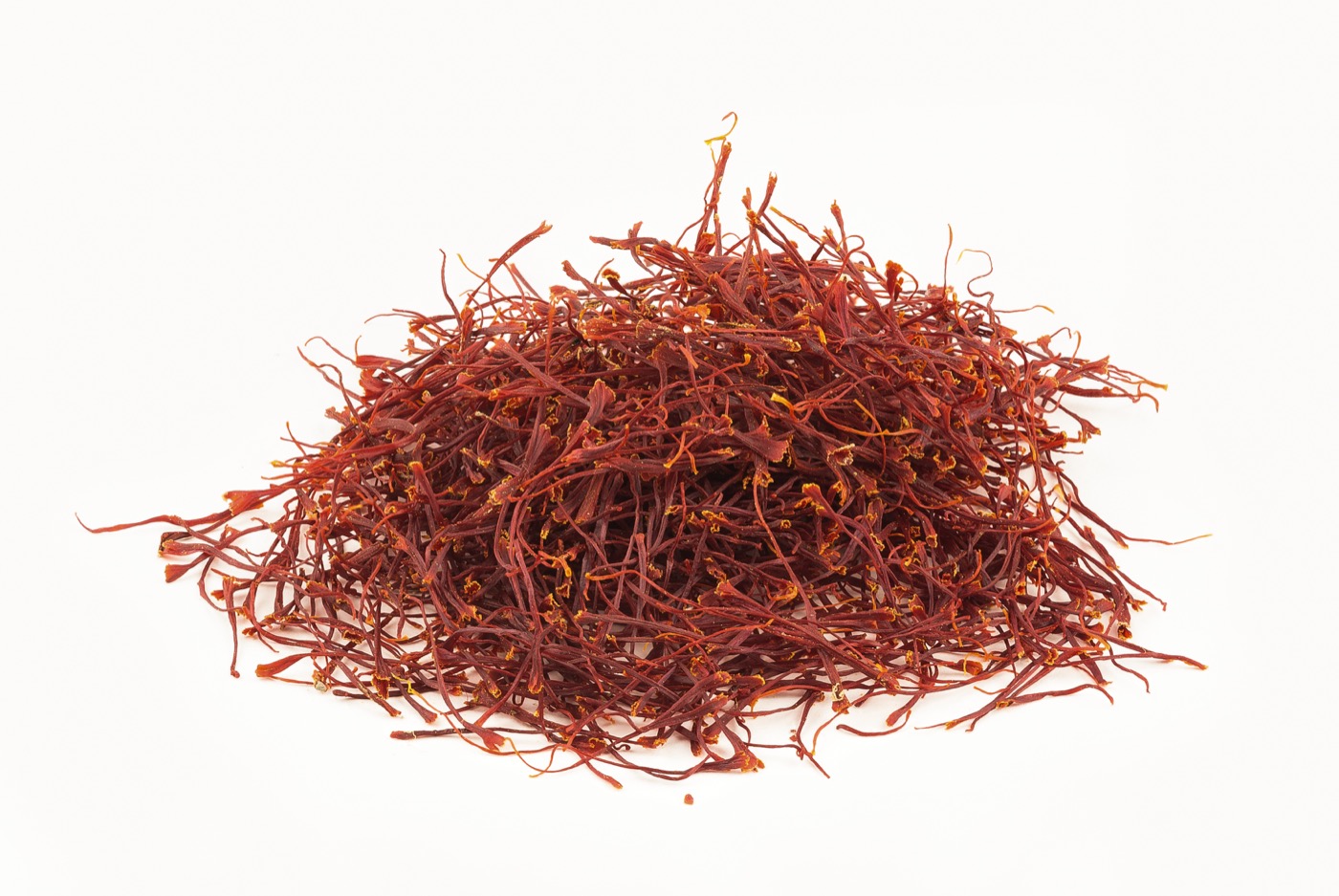
Threads are the whole dried stigma; an extract concentrates the stigma's soluble compounds (crocins, picrocrocin, safranal) into a standardized powder. Both have been studied at 30 mg a day: dried stigma in the 2005 placebo trial, 8 an extract in the fluoxetine comparison and the healthy-adult trials. 10,1,2 An extract's crocin and safranal content can be measured and held constant, which matters because whole saffron is frequently adulterated. 31,32
Can you take saffron with caffeine?
No human trial has tested what the two do together, so we cannot tell you. Six days of a saffron infusion reduced CYP1A2, the enzyme that clears caffeine, by about 14% in saliva in 34 volunteers, significant in men only; the authors judged this unlikely to matter except possibly for CYP1A2-cleared substances in men, and caffeine is one. 26 Free Will carries 150 mg of caffeine per scoop; if you are caffeine-sensitive, start with one.
How much saffron per day is safe?
Trial doses of 28–30 mg a day ran for four to eight weeks; the 28 mg trial reported no side effects and the 30 mg placebo trial found none beyond placebo. 1,8 100 mg a day for six weeks produced no adverse effects in 45 men, 22 and 200–400 mg a day for one week caused only small, within-range blood changes, plus lower standing blood pressure at 400 mg. 21 Two Free Will servings are 60 mg of saffron extract and 300 mg of caffeine; the caffeine is the reason to treat that as a ceiling.
Is the saffron in Free Will real saffron?
The label says saffron extract from Crocus sativus stigmas, 30 mg. Because saffron is routinely cut with other plants, 31 the real proof is a certificate of analysis showing crocin and safranal content against the ISO 3632 grading compounds. 32 We will publish the brand, source and that document once the first production batch is in hand. Until then we tell you what the label says, and not more.
References
Every source below was opened before it was linked. Study sizes, doses and results are quoted from the published abstracts, except where a reference says "section read".
- Kell G, Rao A, Beccaria G, Clayton P, Inarejos-García AM, Prodanov M. affron® a novel saffron extract (Crocus sativus L.) improves mood in healthy adults over 4 weeks in a double-blind, parallel, randomized, placebo-controlled clinical trial. Complement Ther Med 2017;33:58–64. PubMed 28735826.
- Jackson PA, Forster J, Khan J, et al. Effects of saffron extract supplementation on mood, well-being, and response to a psychosocial stressor in healthy adults: a randomized, double-blind, parallel group, clinical trial. Front Nutr 2021;7:606124. PubMed 33598475.
- Pouchieu C, Pourtau L, Brossaud J, et al. Acute effect of a saffron extract (Safr'Inside™) and its main volatile compound on the stress response in healthy young men: a randomized, double blind, placebo-controlled, crossover study. Nutrients 2023;15(13). PubMed 37447245.
- Amadieu C, Leyrolle Q, Farneti M, et al. Effect of saffron extract supplementation on mood in healthy adults with subclinical symptoms of depression: a randomized, double-blind placebo-controlled study. Am J Clin Nutr 2025;122(6):1625–1635. PubMed 41047129.
- Lopresti AL, Smith SJ. An examination into the mental and physical effects of a saffron extract (affron®) in recreationally-active adults: a randomized, double-blind, placebo-controlled study. J Int Soc Sports Nutr 2022;19(1):219–238. PubMed 35813851.
- Lopresti AL, Smith SJ, Metse AP, Drummond PD. Effects of saffron on sleep quality in healthy adults with self-reported poor sleep: a randomized, double-blind, placebo-controlled trial. J Clin Sleep Med 2020;16(6):937–947. PubMed 32056539.
- EFSA Panel on Nutrition, Novel Foods and Food Allergens. Affron® and increase in positive mood: evaluation of a health claim pursuant to Article 13(5) of Regulation (EC) No 1924/2006. EFSA J 2021;19(7):e06660. PubMed 34249157.
- Akhondzadeh S, Tahmacebi-Pour N, Noorbala AA, et al. Crocus sativus L. in the treatment of mild to moderate depression: a double-blind, randomized and placebo-controlled trial. Phytother Res 2005;19(2):148–151. PubMed 15852492.
- Akhondzadeh S, Fallah-Pour H, Afkham K, Jamshidi AH, Khalighi-Cigaroudi F. Comparison of Crocus sativus L. and imipramine in the treatment of mild to moderate depression: a pilot double-blind randomized trial. BMC Complement Altern Med 2004;4:12. PubMed 15341662.
- Noorbala AA, Akhondzadeh S, Tahmacebi-Pour N, Jamshidi AH. Hydro-alcoholic extract of Crocus sativus L. versus fluoxetine in the treatment of mild to moderate depression: a double-blind, randomized pilot trial. J Ethnopharmacol 2005;97(2):281–284. PubMed 15707766.
- Hausenblas HA, Saha D, Dubyak PJ, Anton SD. Saffron (Crocus sativus L.) and major depressive disorder: a meta-analysis of randomized clinical trials. J Integr Med 2013;11(6):377–383. PubMed 24299602.
- Tóth B, Hegyi P, Lantos T, et al. The efficacy of saffron in the treatment of mild to moderate depression: a meta-analysis. Planta Med 2019;85(1):24–31. PubMed 30036891.
- Marx W, Lane M, Rocks T, et al. Effect of saffron supplementation on symptoms of depression and anxiety: a systematic review and meta-analysis. Nutr Rev 2019;77(8):557–571. PubMed 31135916.
- Dai L, Chen L, Wang W. Safety and efficacy of saffron (Crocus sativus L.) for treating mild to moderate depression: a systematic review and meta-analysis. J Nerv Ment Dis 2020;208(4):269–276. PubMed 32221179.
- Shafiee A, Jafarabady K, Seighali N, et al. Effect of saffron versus selective serotonin reuptake inhibitors (SSRIs) in treatment of depression and anxiety: a meta-analysis of randomized controlled trials. Nutr Rev 2025;83(3):e751–e761. PubMed 38913392.
- Sarris J, Ravindran A, Yatham LN, et al. Clinician guidelines for the treatment of psychiatric disorders with nutraceuticals and phytoceuticals: the World Federation of Societies of Biological Psychiatry (WFSBP) and Canadian Network for Mood and Anxiety Treatments (CANMAT) Taskforce. World J Biol Psychiatry 2022;23(6):424–455. PubMed 35311615.
- Lopresti AL, Drummond PD. Saffron (Crocus sativus) for depression: a systematic review of clinical studies and examination of underlying antidepressant mechanisms of action. Hum Psychopharmacol 2014;29(6):517–527. PubMed 25384672.
- Matraszek-Gawron R, Chwil M, Terlecki K, Skoczylas MM. Current knowledge of the antidepressant activity of chemical compounds from Crocus sativus L. Pharmaceuticals (Basel) 2022;16(1). PubMed 36678554.
- Hosseini A, Razavi BM, Hosseinzadeh H. Pharmacokinetic properties of saffron and its active components. Eur J Drug Metab Pharmacokinet 2018;43(4):383–390. PubMed 29134501.
- Umigai N, Murakami K, Ulit MV, et al. The pharmacokinetic profile of crocetin in healthy adult human volunteers after a single oral administration. Phytomedicine 2011;18(7):575–578. PubMed 21112749.
- Modaghegh MH, Shahabian M, Esmaeili HA, Rajbai O, Hosseinzadeh H. Safety evaluation of saffron (Crocus sativus) tablets in healthy volunteers. Phytomedicine 2008;15(12):1032–1037. PubMed 18693099.
- Kianbakht S, Ghazavi A. Immunomodulatory effects of saffron: a randomized double-blind placebo-controlled clinical trial. Phytother Res 2011;25(12):1801–1805. PubMed 21480412.
- Mohamadpour AH, Ayati Z, Parizadeh MR, Rajbai O, Hosseinzadeh H. Safety evaluation of crocin (a constituent of saffron) tablets in healthy volunteers. Iran J Basic Med Sci 2013;16(1):39–46. PubMed 23638291.
- Hasheminasab FS, Hajimonfarednejad M, Najibi SM, et al. Adverse events of saffron (Crocus sativus L.): systematic review of current evidence. Health Sci Rep 2026;9(5):e72212. PubMed 42057871.
- Bostan HB, Mehri S, Hosseinzadeh H. Toxicology effects of saffron and its constituents: a review. Iran J Basic Med Sci 2017;20(2):110–121. PubMed 28293386.
- Begas E, Bounitsi M, Kilindris T, et al. Effects of short-term saffron (Crocus sativus L.) intake on the in vivo activities of xenobiotic metabolizing enzymes in healthy volunteers. Food Chem Toxicol 2019;130:32–43. PubMed 31082462.
- Hosseinzadeh H, Nassiri-Asl M. Avicenna's (Ibn Sina) the Canon of Medicine and saffron (Crocus sativus): a review. Phytother Res 2013;27(4):475–483. PubMed 22815242.
- Nemati Z, Harpke D, Gemicioglu A, Kerndorff H, Blattner FR. Saffron (Crocus sativus) is an autotriploid that evolved in Attica (Greece) from wild Crocus cartwrightianus. Mol Phylogenet Evol 2019;136:14–20. PubMed 30946897.
- Kazemi-Shahandashti SS, Mann L, El-Nagish A, et al. Ancient artworks and Crocus genetics both support saffron's origin in early Greece. Front Plant Sci 2022;13:834416. PubMed 35283878.
- Gohari AR, Saeidnia S, Mahmoodabadi MK. An overview on saffron, phytochemicals, and medicinal properties. Pharmacogn Rev 2013;7(13):61–66. PubMed 23922458.
- Ryparova Kvirencova J, Navratilova K, Hrbek V, Hajslova J. Detection of botanical adulterants in saffron powder. Anal Bioanal Chem 2023;415(23):5723–5734. PubMed 37587313.
- García-Rodríguez MV, López-Córcoles H, Alonso GL, Pappas CS, Polissiou MG, Tarantilis PA. Comparative evaluation of an ISO 3632 method and an HPLC-DAD method for safranal quantity determination in saffron. Food Chem 2017;221:838–843. PubMed 27979282.
- U.S. Code of Federal Regulations, Title 21 §182.10, "Spices and other natural seasonings and flavorings" (generally recognized as safe), listing saffron, Crocus sativus L. 2024 edition. govinfo.gov. Section read.
- U.S. Code of Federal Regulations, Title 21 §73.500, "Saffron" (color additives exempt from certification). 2024 edition. govinfo.gov. Section read.
- Avgerinos KI, Vrysis C, Chaitidis N, Kolotsiou K, Myserlis PG, Kapogiannis D. Effects of saffron (Crocus sativus L.) on cognitive function: a systematic review of RCTs. Neurol Sci 2020;41(10):2747–2754. PubMed 32445136.
- Lian J, Zhong Y, Li H, Yang S, Wang J, Li X, Zhou X, Chen G. Effects of saffron supplementation on improving sleep quality: a meta-analysis of randomized controlled trials. Sleep Med 2022;92:24–33. PubMed 35325766.
Every milligram. On the label.
No proprietary blends, ever. See every ingredient and the full label on the ingredients & testing page.
More ingredients
GET EARLY ACCESS†These statements have not been evaluated by the Food and Drug Administration. This product is not intended to diagnose, treat, cure, or prevent any disease.